


News
PROFESSIONAL CNC EQUIPMENT MANUFACTURER
Premium Paper-Based Cat Litter
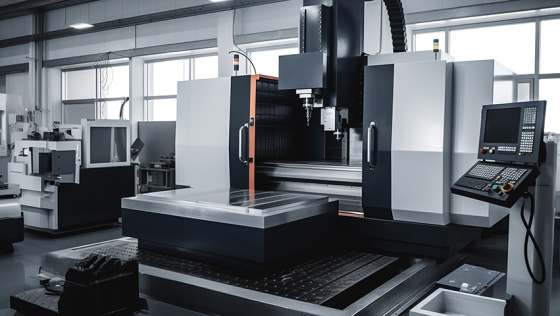
In modern machining, a linear guide is often seen as the standard choice for speed and precision, but that does not mean Hard rail systems have lost their value. For many manufacturing and processing applications, hard rail designs still offer clear advantages in load capacity, rigidity, and long-term stability. Understanding when a Hard rail makes more sense helps operators, buyers, and decision-makers choose equipment that truly matches production needs.
Why does a hard rail still matter in modern machine tool selection?
In manufacturing and processing machinery, the discussion is no longer simply “hard rail versus linear guide.” The real question is which motion support system fits the cutting force, duty cycle, workpiece size, and long-term accuracy target. A hard rail, also called a box way or sliding guideway in many machine tool contexts, remains highly relevant when equipment must absorb heavy loads, resist vibration, and maintain geometric stability across years of production.
For information researchers and procurement teams, this matters because the wrong guideway choice often creates hidden cost. A machine may look faster on paper, yet under heavy interrupted cutting, large molds, or roughing operations, higher feed speed does not always translate into better output. In many cases, the more rigid hard rail structure helps preserve tool life, improves surface consistency on difficult materials, and reduces chatter during long cycle jobs.
Operators also notice the difference in practical use. Machines built on hard rail systems often feel more stable during deep cuts, especially when spindle power is paired with high torque at low to mid speed. In workshops running 8–16 hours per day, that stability can matter more than rapid traverse values alone. For buyers comparing equipment in the 3-axis, heavy-duty vertical machining center, horizontal boring, or large gantry categories, guideway design should be treated as a core structural decision.
A useful way to evaluate the issue is to separate speed-driven applications from force-driven applications. Linear guide systems are often favored where acceleration, cycle compression, and fine positioning dominate. Hard rail systems make more sense where damping, rigidity, and resistance to deformation are critical. That distinction helps business evaluators align investment with actual production demand rather than market shorthand.
What defines a hard rail in machine construction?
A hard rail system generally uses sliding contact surfaces that are hardened, ground, and matched with controlled lubrication. Compared with rolling-element linear guides, the contact behavior is different. The sliding interface creates stronger damping characteristics and broad support contact, which is why hard rail machines are often chosen for heavier castings, large fixtures, and workpieces that generate significant cutting reaction force.
In real workshop terms, this means better support under heavy table loads, more resistance to deflection during rough machining, and a machine structure that can remain dependable in applications where load fluctuates sharply. Typical examples include cast iron roughing, steel block machining, mold base preparation, valve body processing, and large plate drilling or milling.
From a decision perspective, a hard rail should not be viewed as old technology. It is better understood as a purpose-built motion solution. In many machine categories, especially those above medium load ranges or requiring strong shock resistance, it remains a technically sound choice rather than a compromise.
- Hard rail strengths usually appear most clearly in heavy cutting, large-part machining, and long production cycles.
- Linear guide strengths usually appear in high-speed travel, faster acceleration, and light to medium cutting with frequent positioning changes.
- The better option depends on the dominant production task, not on a single advertised specification.
Which machining scenarios make a hard rail the better choice?
Hard rail systems are especially suitable when machining loads are high, workpieces are large, or process stability matters more than peak rapid motion. In many factories, this includes roughing operations, interrupted cutting, heavy milling, low-speed high-torque cutting, and long cycle jobs where vibration control directly affects dimensional repeatability. If the machine regularly handles parts weighing several hundred kilograms to several tons, hard rail construction often provides a more reliable support base.
Another common fit is the mold and die sector. Large mold plates, cavity pre-machining, and heavy steel removal demand consistent rigidity over extended machining time. In these cases, reducing chatter and preserving tool engagement stability can be more valuable than shaving a few seconds from non-cutting movement. For users processing P20, H13, alloy steel, ductile iron, or similar materials, a hard rail machine can offer a practical advantage during the rough-to-semi-finish stages.
The same logic applies to energy, construction machinery, and general equipment manufacturing. Components such as gearbox housings, pump bodies, structural bases, flanges, and large frames often require stronger load support and better tolerance retention over long runs. In these applications, the machine’s ability to remain stable across 2-shift production or repeated heavy cuts is often a decisive factor for procurement.
A hard rail also deserves attention where the shop environment is less ideal. In plants exposed to cast iron dust, scale, coolant contamination, and uneven maintenance discipline, a robust guideway structure may offer better long-term durability if lubrication management is properly maintained. This does not remove maintenance responsibility, but it can improve tolerance to demanding conditions over a service horizon of 5–10 years.
Typical applications where hard rail machines perform well
The table below helps buyers compare common applications by machining behavior rather than by marketing labels. This is useful when reviewing quotations from different machine builders, because guideway suitability depends on process load, not just machine size.
The key takeaway is simple: where the machine spends most of its time cutting hard, carrying weight, or resisting vibration, a hard rail may create more usable productivity than a nominally faster motion system. Buyers should map machine selection to the actual ratio of roughing, semi-finishing, and finishing in their plant, ideally over a 6–12 month order horizon rather than one sample part.
A quick scenario checklist
- If more than half of the machine time is heavy material removal, hard rail deserves serious consideration.
- If table loading regularly approaches the upper range of the machine category, rigidity and support should outrank top rapid speed.
- If cutting conditions include intermittent impact, broad guideway contact and damping become more valuable.
- If output depends on stable roughing before finish machining on another station, the hard rail structure may improve process consistency.
Hard rail vs linear guide: what should buyers compare beyond speed?
Too many comparisons stop at feed rate and positioning claims. In procurement practice, the more useful comparison includes rigidity, damping, load behavior, maintenance discipline, surface finish under difficult cutting, and total operating fit. A machine that moves faster without remaining stable under production load can still be the wrong investment. This is why hard rail versus linear guide should be analyzed through the actual process window.
For operators, the difference shows up in cut feel, spindle load fluctuation, and tool wear pattern. For purchasing staff, it affects service life, maintenance planning, and whether the machine meets real throughput targets after installation. For business evaluators, it influences return on investment over 3–5 years, especially when product mix includes heavy workpieces or changing batch sizes.
Neither system is universally better. Linear guides often win in high-speed, high-acceleration, light-to-medium duty machining. Hard rails often win where stable force absorption and structural support matter more. The right comparison therefore needs process weighting, not brand assumptions.
The table below can be used as a practical evaluation framework during machine tool review, technical clarification, or quotation comparison.
This comparison should be read together with the machine’s overall structure, spindle curve, casting weight, lubrication method, and intended part family. A hard rail on a poorly engineered machine is not automatically superior, and a linear guide on a well-designed machine can still perform very well. The decision should always consider the full machine system.
Three questions that sharpen the comparison
First, what percentage of your real production is roughing versus finishing? If roughing occupies 40%–70% of actual spindle time, guideway rigidity becomes a major economic factor. Second, what is your normal workpiece weight range? If the table sees recurring heavy loading, the support behavior of a hard rail becomes more relevant. Third, how often do you machine difficult materials or interrupted surfaces? That is where damping and shock resistance matter most.
These questions help prevent a common purchasing mistake: selecting a machine based on the most impressive visible specification instead of the most influential production factor. In many B2B environments, the guideway decision should be made jointly by manufacturing engineers, operators, and procurement teams, not by price comparison alone.
How should procurement teams evaluate hard rail machines before ordering?
A good procurement process should translate workshop needs into technical checkpoints. For hard rail machines, the focus should be on structural capacity, lubrication logic, machining stability, maintenance access, and delivery fit. Buyers often compare only table size, spindle speed, and quoted accuracy, yet miss the factors that determine whether the machine stays productive after 12–24 months of use.
A practical selection review can be built around 5 key checks: intended material range, part size and weight, roughing intensity, daily operating hours, and maintenance capability on site. If the machine is expected to run two shifts, carry large fixtures, or absorb intermittent cutting loads, procurement should request more than a generic brochure. Technical clarification should include guideway structure, lubrication points, adjustment approach, and suggested preventive maintenance intervals.
Commercial evaluation also matters. Ask about typical lead time, installation scope, commissioning support, and consumable or replacement part planning. For many standard machine tools, delivery windows may fall in the 4–12 week range depending on specification and origin, while custom heavy-duty configurations can require longer. Early confirmation reduces schedule risk, especially when line expansion or replacement timing is tight.
If multiple stakeholders are involved, it helps to use a shared scoring sheet. This reduces subjective judgment and lets business evaluators connect technical fit to expected production return.
Procurement checklist for a hard rail machine
The following table can support RFQ review, supplier discussion, and internal approval. It focuses on practical selection factors rather than headline marketing claims.
When teams use this kind of checklist, they usually make a better decision than when they focus only on price and catalog speed. The most cost-effective hard rail machine is not simply the cheapest quotation; it is the one that matches part mix, operating hours, and maintenance reality with the least disruption.
A 4-step buying process that reduces mismatch
- Define 3–5 representative workpieces, including size, material, cycle type, and fixture condition.
- Classify the process as speed-dominant or load-dominant, and estimate daily operating hours.
- Request technical clarification on guideway type, lubrication, casting structure, and maintenance access.
- Review total ownership factors over 3–5 years, including downtime risk, consumables, and service response.
What are the common misconceptions, maintenance concerns, and real-world trade-offs?
One common misconception is that hard rail always means lower accuracy. That is not a reliable conclusion. Accuracy depends on the overall machine design, assembly quality, thermal behavior, lubrication control, and application fit. In heavy-duty machining, a hard rail machine may actually hold usable process accuracy more consistently because the structure resists cutting-induced disturbance better.
Another misconception is that speed alone decides productivity. In many factories, actual throughput losses come from chatter, extra finishing allowance, unstable tool life, rework, and maintenance interruptions. If a faster-moving machine struggles under heavy loads, the promised cycle advantage can shrink quickly. Hard rail systems can therefore be the more productive solution in processes where stability protects output quality.
Maintenance is a real factor and should be discussed honestly. Hard rail systems depend on correct lubrication, cleanliness management, and periodic inspection. Shops should establish routine checks by shift or by week, depending on machine use intensity. For operations running 6 days per week or two shifts per day, lubrication monitoring and way surface inspection should be built into standard maintenance routines rather than treated as occasional tasks.
The trade-off is clear: hard rail usually sacrifices some rapid movement in exchange for stronger damping and load support. For heavy-duty machining, that is often a smart trade. For light, high-speed, frequently repositioned work, a linear guide may remain the better choice. Good decision-making comes from aligning this trade-off with the dominant value driver of the shop.
FAQ for researchers, users, and buyers
Is a hard rail machine only suitable for rough machining?
No. A hard rail machine is not limited to roughing. It is often selected because roughing is important, but it can also support semi-finishing and finishing when the machine structure, spindle, and control system are properly matched. The deciding factor is not whether finishing exists, but whether heavy-load stability is a major part of the process. In mixed production environments, one machine may perform roughing and semi-finishing effectively across many part families.
How often should hard rail maintenance be reviewed?
The exact schedule depends on machine usage, coolant condition, and environment, but many shops benefit from a layered routine: daily visual checks, weekly lubrication confirmation, and monthly or quarterly preventive review. If the machine runs in dusty cast iron conditions or under long 8–16 hour cycles, maintenance frequency should be tightened. Procurement teams should confirm recommended service intervals before ordering.
What should a purchaser ask a supplier before selecting a hard rail machine?
At minimum, ask about intended workpiece weight range, preferred application type, lubrication design, installation support, lead time, and the machine’s best-fit cutting profile. It is also useful to discuss whether your production is batch-based, mixed-model, or continuous. A serious supplier should be able to comment on application suitability, not just quote a specification sheet.
When should a linear guide still be preferred?
If your production relies on high acceleration, frequent positioning, lighter cutting loads, and short cycle times, a linear guide often remains the better choice. This is common in smaller precision components, frequent toolpath changes, and speed-focused machining strategies. The choice should follow the production pattern, not a general belief that one system has replaced the other.
Why choose us when evaluating hard rail equipment or machine configurations?
Choosing a hard rail machine is rarely a catalog-only decision. It requires matching guideway structure to material type, part size, cutting style, workshop rhythm, and budget control. We support that process with application-focused communication, helping buyers and technical teams clarify whether a hard rail or linear guide configuration better fits real machining conditions rather than theoretical preference.
You can contact us for specific topics such as workpiece load evaluation, machine configuration comparison, roughing versus finishing balance, expected delivery window, custom setup needs, and quotation alignment. If you are comparing several machine tool options, we can help organize the decision around 4 practical areas: application fit, structural suitability, maintenance expectations, and project timing.
For procurement staff and business evaluators, this means clearer selection logic and fewer surprises after installation. For operators and production teams, it means a better chance of getting a machine that behaves well under actual shop conditions. If you already have representative part drawings, material information, or target production volumes, those details can be used to narrow the guideway recommendation faster.
Contact us to discuss parameter confirmation, machine type selection, hard rail versus linear guide comparison, estimated lead time, customization scope, sample part review, and quotation planning. A focused technical discussion at the start usually saves far more time and cost than correcting a mismatched machine choice later.